
It’s impossible to talk about Venba without talking about Venba… so spoilers to follow.
Sometimes it is easy to miss, or even overlook, a new indie release. I had originally done so with Venba. Hearing nothing before launch, the game was not on my radar. But after my friend recommended it, I went to check it out.
Initially, Venba checks a lot of my boxes. It’s short, it’s story-based, it’s got a beautiful art style. (Did I mention it’s short?) I added the game to my mental backlog.
But like a hearty stew, I let Venba sit for a bit to cook until I finally played it.
A Lonely Friday Night

Sitting downloaded in my Xbox app for over a month, it took a lonely Friday night, and a desire to only play for two hours to finally launch Venba.
I’m glad I did.
At its core, Venba is a cooking game. You use a recipe book to help guide you through making Tamil cuisine. The book belonged to Venba’s mother but it was not well kept and the recipes are incomplete. Through trial and error you discover how to cook the dishes. The puzzles aren’t difficult but the fun comes from figuring out the steps and successfully making the dish.
The main draw of the game, one I admit I do not recall seeing before, is the story. Venba is a narrative-based cooking game. Which, as Gordon Ramsay would say, “elevates” the product. Between bits of cooking, you follow the lives of Tamil immigrants in Canada trying to figure out how to navigate life. Throughout the story, the game discusses children, parental relationships, language, fitting in, cooking, identity, racism, love… it is a packed two hours. Despite this being a story of immigrants and being a child of immigrants, I feel everyone can take something deeply emotional away once the credits roll. It’s a human story — and maybe my favorite one of 2023 so far.
Cooking Up an Appetite

My experience with cooking is minimal. I am, unfortunately, more of a “warm it up” kind of chef. Sorry, “chef.” But in recent months, I have been wanting to learn how to cook. It’s a fascinating science. I love watching how every element plays an integral role in the process. I rely on my wonderful girlfriend to make some of the most amazing dishes I have ever had, and to save me from a lifetime of ramen packets. But in watching her work, I have become far more interested in learning myself. Sure, I should have done so sooner. (I’m now thirty, mind you.) But, as always, better late than never.
Growing up, my family didn’t dine out much. We rarely visited restaurants. My exposure to different cuisines was stagnant. It wasn’t until high school that I would branch out with the help of friends. Even today, when my girlfriend and I visit a new restaurant, I let her take the lead on what to order. “Well, what’s good?” I ask, and she proceeds to list a few dishes. “I think I’ll do that,” I respond and order one of her suggestions.
One of her favorites is Indian food. We’ve been quite a few times over the course of the last two years. Before meeting her, I had Indian only once or twice. The most I could recall was that naan was delicious. But with her love of the food, I was able to expand my palate and while I still let her order for us, I know what to expect.
Going into Venba, I knew as the player I’d be cooking, but I didn’t know what I’d be cooking. Completely unfamiliar to me, the Tamil cuisine I prepared for us as both Venba and Kavin enthralled me. Maybe it was because I was making it with my own (virtual) hands. But seeing the ingredients spread on the table waiting their turn to be added into the mix made me feel like a chef. Once I got into the groove and knew the method for the recipe, it felt like conducting a symphony. Grab this, place it there, take the next ingredient, put it on top and repeat. In these moments I was a MasterChef.
But it wasn’t just the experience of making the dishes. What Venba does so well is show and tell. While cooking (and after) the characters will describe the dish. This first makes you excited to cook it, and second makes you wish you could eat off the plate on your screen. There is also an option to get more detail on the dish while preparing it. The game at every opportunity relishes in showering the dish with admiration. Venba wants you to love the dish as much as it does. It succeeds.
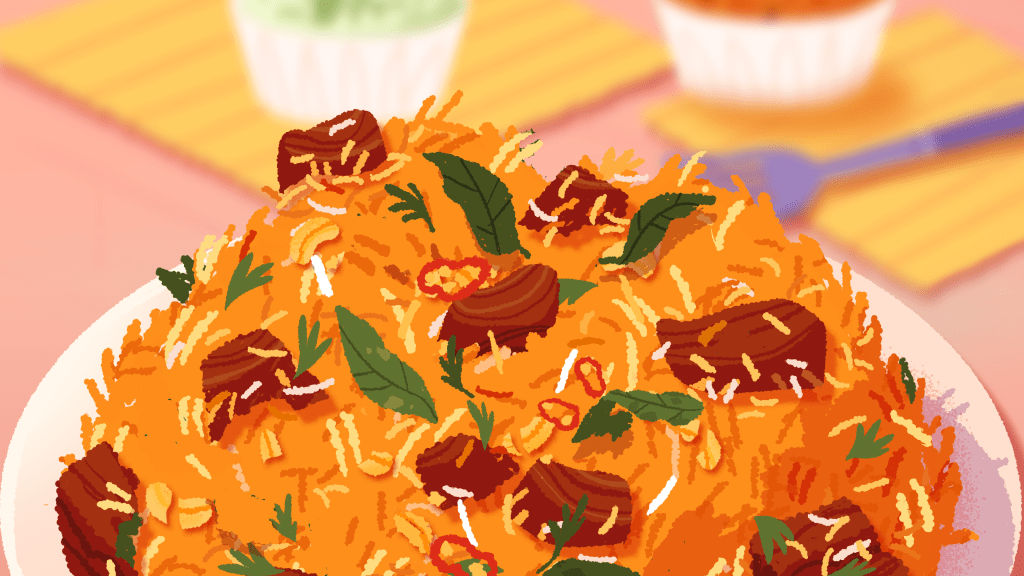
Venba is a gorgeous game. It has a stunning art style. Each scene bursts with color with beautiful hand drawn images. The game looks like a painting, and especially so when you have the ingredients before you. The vibrant colors of each ingredient pop off the screen and mix into the final dish for each chapter’s masterpiece. While not lifelike, the game manages to make the dish look absolutely appetizing.
After playing, I had a desire to try the dishes from the game. Each one is enticing in its own way, and it’s because the game does so well at showing and telling that when the credits rolled I found myself salivating. I’ve yet to try the dishes, but check back with me soon, as that is sure to change.
Being a Son
When I start a game I’m not expecting to get emotionally wrecked and bawl my eyes out. Sure it happens on occasion but not often. Which is why it shocked me when Venba absolutely gut punched me.
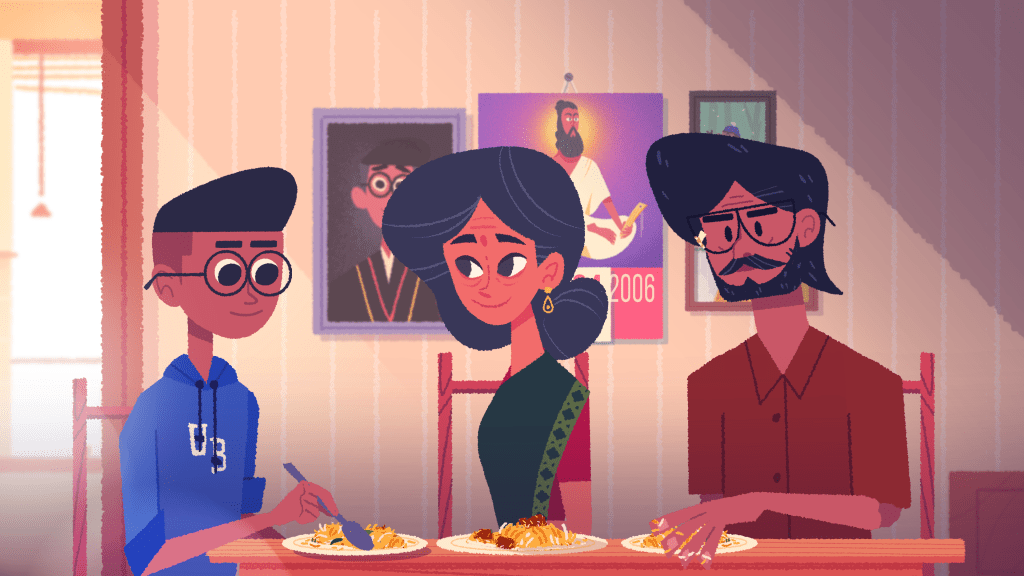
A little after the midpoint of the game, Venba finds herself alone in her home, her husband passed and her son, Kavin, away for college. On Kavin’s birthday, Venba prepares a feast for the two of them as he is set to visit. Venba (and by extension, me) spends the day cooking a tableful of food only to wait and wait for a son who gets too busy to visit. The phone pops up and you receive the text. It’s disappointing. It’s heartbreaking. But the message stays on the screen — and being the nosy player, I figure I can scroll through their conversations.
I can.
It was here, scrolling through the texts of an immigrant mother and her now away son I broke down in tears. The messages on her phone revealed a mother, a wife, who wanted to talk to her son only to be met with a quick hello or nothing at all. My stomach sank and my eyes watered, with tears streaming down my cheeks. I thought we were only supposed to be cooking. Clearly not. And there were no onions around to blame.
I had to pause and step away. I took around thirty minutes to compose myself. I did some chores, some laundry, putting the dishes away, etc. Finally I could come back to finish the remaining chapters.
Afterwards, I had to look within to see why that scene resonated so deeply with me. So much of who that family is does not reflect my own. My parents are both immigrants, but assimilated long before I was born, so I never felt out of place as an “other.” I believe it was because of the human existence and the natural cycle of life. At one point we move out, we live on our own, we find who we are as people apart from our family. It was only earlier this year I moved out. My parents were constants in my life. Day in, day out. Now, much like Kavin, I find myself talking to them less. Some days are too busy for a call. Then it turns into a few days. It’s never malicious, but we find ourselves distant. At that moment, on that phone, I saw my own parents in Venba. Reaching out to me because we’d hadn’t spoken in a few days. The moment felt so real — so true to life. Here was this cute indie game cooking up one of the most raw, emotional reactions I’ve ever had while gaming.
The Perfect Recipe
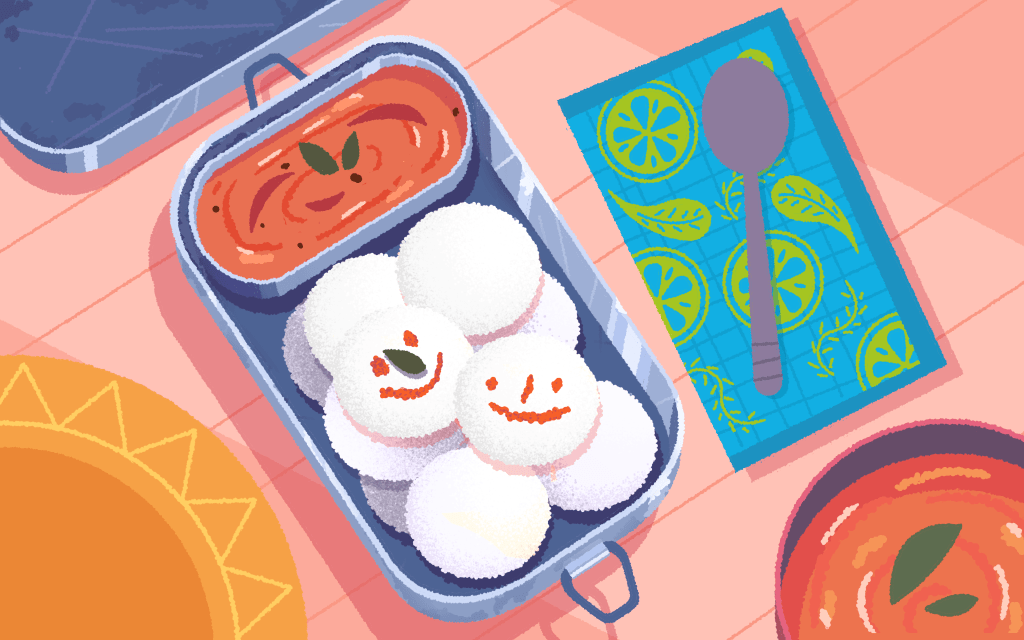
Sometimes when I wait to play a game, I kick myself for doing so. My enjoyment is delayed, but the most important thing is I do get to have the experience of playing. This is where I found myself with Venba. A slightly delayed experience but one I will forever remember. Venba isn’t just a cute, must-play indie game. It is one of the best games of 2023. You’d be best to not sleep on it like I did, even if just for another month.


 Kevin is Write